
Fatty liver is by far the most common liver disease in Pakistan, and many people only come across it by accident on an ultrasound. Most people have it and don’t feel unwell at all. In a small minority, however, the fat will cause inflammation and scarring, which can go on to lead to cirrhosis. The real issue isn’t whether you have fatty liver; it’s whether you have the type that would benefit from input from a liver specialist in Lahore.
This guide covers the warning signs, test results, and health problems that indicate it’s time to see a gastroenterologist, and what the doctor would do when you arrive.
Red Flag Symptoms That Need Medical Attention
Simple fatty liver is usually silent. These signs suggest the liver may be struggling and should not be ignored:
- Jaundice: yellow eyes or skin, dark urine or pale stools.
- Fluid retention: a swollen abdomen or swelling of the feet and ankles.
- Bleeding or bruising: easy bruising, frequent nosebleeds, black stools or vomiting blood.
- Neurological: confusion, unusual drowsiness, reversed sleep patterns or poor concentration.
- Systemic symptoms: unexplained weight loss, persistent fatigue, loss of appetite, generalised itching or pain in the right upper quadrant of the abdomen.
Test Results That Mean You Should See a Specialist
You can be perfectly well and still require specialist care if your results show any of the following.
| Result | Why it matters |
| Elevated fibrosis score (such as FIB-4) or high stiffness on FibroScan | Suggests scarring, which is the strongest predictor of liver complications |
| Liver enzymes (ALT, AST) that stay raised for several months | Points to ongoing inflammation that needs a cause |
| Low platelet count, low albumin, raised bilirubin or prolonged clotting time | Can signal reduced liver function or advanced scarring |
| Ultrasound that is unclear or shows a coarse liver texture, uneven surface or enlarged spleen | Needs expert interpretation and often further imaging |
A FIB-4 score above roughly 2.67 is generally regarded as high risk; below 1.3 is generally reassuring (though age will affect this). Don’t interpret the numbers in isolation, and please bring the original reports with you to the appointment.
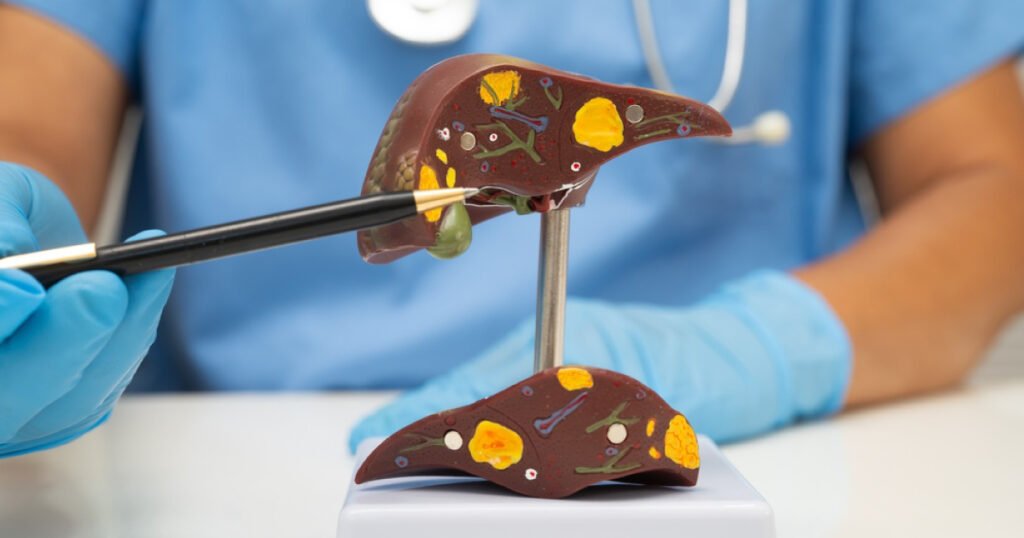
What a Gastroenterologist Does for Fatty Liver
Staging the Disease
The first job is to work out how much scarring you have. That’s generally a combination of blood-based scores, a FibroScan or similar elastography, and, if there’s uncertainty, an MRI or liver biopsy. Staging is the process of separating benign fatty change from active inflammation and early cirrhosis, and it makes a massive difference to what happens next.
Guiding First-Line Care
For most patients, the foundation is lifestyle change, and a specialist makes it specific:
- A realistic weight loss target (losing 7 to 10% of body weight) will reduce liver fat and inflammation.
- A diet and exercise plan to fit in with your lifestyle, plus some advice on how to stop or at least dramatically cut down on alcohol.
- Better control of diabetes, blood pressure, and cholesterol (all of which affect the liver).
Targeted Medical Management
When the disease is more advanced, the doctor can go further:
- Adjust your diabetes and cholesterol meds so they also benefit the liver.
- Consider newer liver-directed therapies where appropriate and available.
- If the scarring is advanced, then arrange an upper endoscopy (also known as a liver endoscopy) to look for the presence of swollen veins that can bleed and regular ultrasound to screen for liver cancer.
- Recommend HAV and HBV vaccination where you’re not immune.
Gastroenterologist vs General Physician: Why the Specialist Matters
A GP is the right first port of call for a mild new finding. A gastroenterologist or hepatologist is the appropriate next step if the liver is involved in a way that requires staging, monitoring, or a procedure.
| General physician | Gastroenterologist / hepatologist | |
| Liver scarring assessment | Relies on basic blood tests and ultrasound | Uses fibrosis scores, elastography and, if needed, biopsy |
| Reading unclear results | Refers to when unsure | Interprets mixed or borderline findings directly |
| Procedures | None | Endoscopy, variceal screening, liver-directed procedures |
| Treatment plan | General lifestyle advice | Staged plan with targeted medication and follow-up schedule |
| Complication surveillance | Limited | Regular screening for varices and liver cancer in advanced disease |
If you’re looking for the best hepatologist in Lahore or the best gastroenterologist in Lahore, the key is a combination of liver expertise and on-site diagnostics.
When You Might Be Referred, and How to Be Seen Quickly
Your GP may refer you on to a gastroenterologist if the liver enzymes remain abnormal for several months, if you have a high fibrosis score, if your ultrasound is inconclusive, or if you have diabetes or obesity in addition to fatty liver. You can also book directly at most private clinics without a referral.
To be seen faster:
- Just let the receptionist know if you’ve got any red flag symptoms (jaundice, a swollen tummy, bleeding, etc) when you call.
- Ask for the earliest slot and find out whether they maintain a cancellation list.
- Choose a clinic that has the FibroScan, ultrasound, and endoscopy on site so you don’t need several separate visits for staging.
- Bring your previous reports so you don’t waste time. When you’re looking for a gastro near you, look for one in a clinic that’s close enough that you’re actually going to attend the follow-ups. Fatty liver really does need regular monitoring.

Get Your Liver Checked Before Scarring Sets In
Fatty liver is so much easier to reverse in the early stages than in the later stages. A single appointment can tell you whether it’s just a case of lifestyle changes or whether you need some more intensive treatment. Book a liver consultation with Dr. Fahd Aziz Rana at Omar Hospital & Cardiac Centre.
Frequently Asked Questions
Can fatty liver be reversed?
Yes, in the early stage. Weight loss, a better diet, regular exercise and cutting alcohol can clear liver fat and calm inflammation. Established scarring may not fully reverse, but it can often be stopped from worsening.
Do I need a liver specialist if I have no symptoms?
Yes, if you have diabetes, obesity, a family history of liver disease, heavy alcohol use or abnormal liver tests. Symptoms usually appear late, so the decision rests on risk and test results.
How often will I need follow-up?
That depends on your stage. Mild disease is often reviewed once or twice a year, while advanced scarring needs more frequent visits and regular screening for complications.