
Bile duct stones are small, hardened deposits that block the flow of bile from the liver to the intestines, potentially causing severe pain, jaundice, and serious infections if left untreated. For many years, the only treatment was an invasive surgery, either an open or a laparoscopic one. However, the advent of a particular type of endoscopy, Endoscopic Retrograde Cholangiopancreatography (ERCP), changed the outlook for patients with bile duct stones almost beyond recognition. Indeed, the procedure allowed for a significant reduction in the number of surgeries needed in most cases, if not their complete elimination.
This blog aims to discuss the ERCP procedure and compare it with traditional surgical removal of bile duct stones, thus demonstrating why interventional endoscopy is now preferred by medical institutions over other, more invasive treatments.
What Is ERCP?
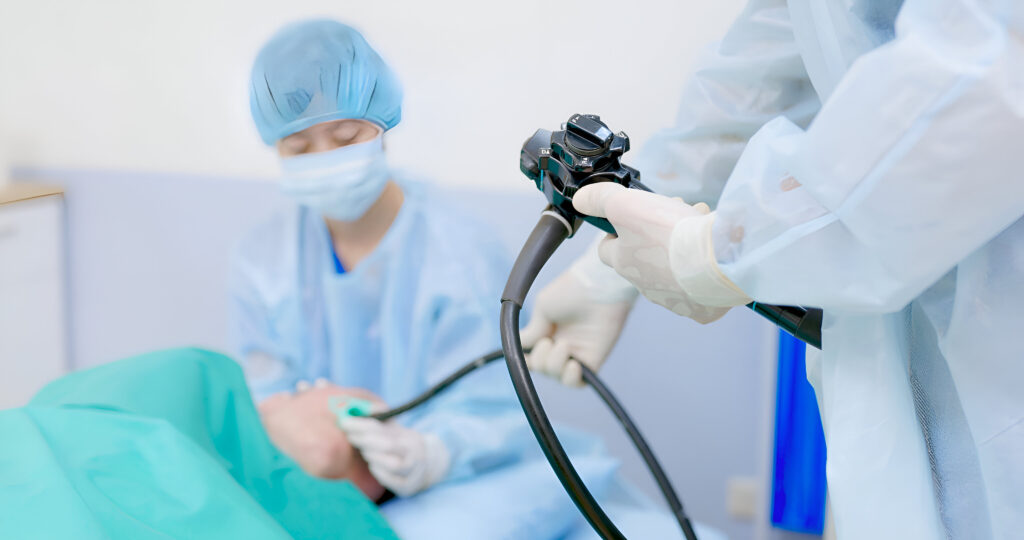
ERCP is one of the many specialized endoscopy procedures in gastroenterology, unlike a simple upper GI endoscopy, which has a primarily diagnostic role. ERCP combines real-time X-ray imaging to endoscopy to examine and treat any possible problems in the pancreatic duct and bile ducts of the patient. A flexible, thin endoscope is inserted into the mouth to reach the small intestine and facilitate earlier bile duct access.
In the treatment, doctors can use several small instruments that are present inside the endoscope in order to remove stones, insert stents, and dilate ducts, and this can be done without a single external incision.
How ERCP Compares to Traditional Surgery
| Factor | ERCP (Interventional Endoscopy) | Traditional Surgery |
|---|---|---|
| Incisions | None, performed through the mouth | Requires abdominal incisions (open or laparoscopic) |
| Recovery time | Typically same-day or overnight | Days to weeks |
| Pain | Minimal | Moderate to significant |
| Anesthesia | Sedation, usually not general anesthesia | Usually general anesthesia |
| Hospital stay | Often outpatient or short-stay | Longer inpatient stay |
| Risk of complications | Lower for most patients | Higher, especially in complex or high-risk patients |
Why ERCP Has Become the Preferred Option
1. It diagnoses and treats in one procedure: Traditional surgery often requires imaging first to confirm the diagnosis and then a separate operation to treat it. In ERCP, the physician can confirm the presence of stones and treat them in the same session.
2. It avoids the risks of major surgery: General anesthesia, larger incisions, and longer recovery all carry additional risks, particularly for older patients or those with other health conditions. Because ERCP is minimally invasive, it’s often suitable for patients who might not be ideal candidates for surgery.
3. Recovery is significantly faster: Many patients undergoing ERCP go home the same day or the following morning, compared to a surgical recovery that can take one to several weeks.
4. It can address complications immediately: If a stone is blocking the bile duct and causing infection (cholangitis) or pancreatitis, ERCP allows for rapid drainage and stone removal, which can be critical in urgent situations.
When Is Traditional Surgery Still Needed?
ERCP isn’t the right choice for every patient. Surgery may still be recommended when:
- Stones are very large or numerous and cannot be safely retrieved endoscopically
- The anatomy of the bile duct makes ERCP technically difficult
- The gallbladder itself needs to be removed (cholecystectomy), which is a separate but often related procedure
- ERCP has been attempted but was unsuccessful
ERCP and surgery are often combined. In particular, ERCP is used to clear the bile duct before conducting a laparoscopic cholecystectomy to remove the gallbladder and prevent gallstone formation.
What to Expect During an ERCP Procedure
- Preparation: Fasting for several hours beforehand, as with other endoscopy procedures.
- Sedation: Most patients receive sedation rather than general anesthesia, keeping them comfortable but not fully unconscious.
- Duration: The procedure itself typically takes 30 minutes to an hour, depending on complexity.
- Recovery: Patients are monitored for a short period afterward and can often go home the same day, with someone else driving them due to sedation.
Get Expert ERCP Care with Dr. Fahd Aziz Rana
A complex procedure like ERCP requires the expertise of a highly skilled specialist. At Omar Hospital and Cardiac Centre, Lahore, Dr. Fahd Aziz Rana has more than 16 years of experience in gastroenterology and advanced UK training in ERCP and other interventional procedures used to treat conditions affecting the bile ducts and pancreas.
Dealing with symptoms like abdominal pain, jaundice, or unexplained fever that could point to bile duct stones? Book a consultation with Dr. Fahd Aziz Rana to find out whether ERCP is the right path forward for you.