
When bile flow from the liver is blocked, it can disrupt the entire digestive system. Conditions like gallstones, tumours, or strictures can lead to serious complications if left untreated.
This is where the endoscopy procedure, specifically ERCP (Endoscopic Retrograde Cholangiopancreatography), becomes essential. It not only diagnoses the problem but also treats it in the same session using bile duct stents.
What is a Bile Duct Stent in an Endoscopy Procedure?
During an endoscopy procedure, a small, flexible tube known as a bile duct stent is placed in the bile duct to keep it open and ensure that bile flows normally from the liver to the intestine. This simple but effective solution restores important digestive functions and prevents problems.
Bile is vital for several bodily processes, including the following:
- Digesting fats efficiently
- Removing waste and toxins from the liver
- Supporting overall digestive balance
When the bile duct is blocked, the body often shows clear warning signs, such as:
- Yellowing of the skin and eyes (jaundice)
- Persistent abdominal pain
- Dark urine and pale stools
- Fever or signs of infection
Placing a stent helps relieve these symptoms quickly and restores normal digestive flow.
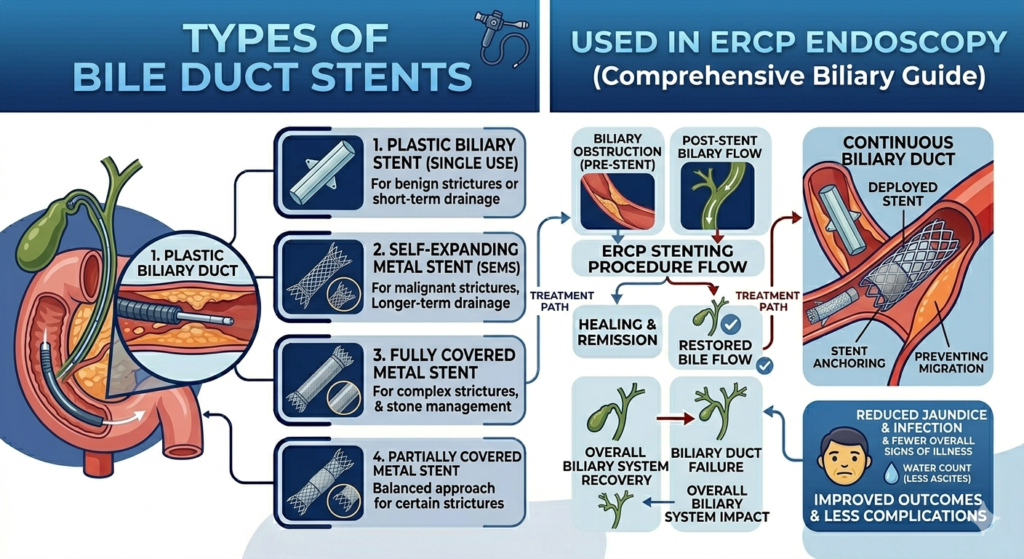
Types of Bile Duct Stents Used in ERCP Endoscopy
Different types of stents are used depending on the condition and duration of treatment. Choosing the right one is a key part of a successful endoscopy procedure.
Common types include the following:
The most commonly used stents include:
- Plastic stents, which are typically used for short-term relief and are replaced periodically
- Self-expanding metal stents (SEMS), which are more durable and suitable for long-term use, especially in cancer-related cases
- Covered stents, designed to prevent tissue from growing into the stent
- Uncovered stents, which allow natural tissue integration but may have a higher risk of blockage over time
Selecting the right stent is a crucial part of ensuring the success of the procedure.
How the ERCP Endoscopy Procedure Keeps the Digestive System Flowing
The ERCP procedure is designed to both diagnose and treat bile duct problems in one session. It is one of the most advanced techniques in modern gastroenterology.
Step-by-Step ERCP Procedure
- A flexible endoscope is passed through the mouth
- It reaches the stomach and small intestine
- A dye is injected into the bile duct for imaging
- X-rays identify blockages or narrowing
- A stent is placed to restore bile flow
Endoscopy Procedure Steps for Bile Duct Stent Placement
Understanding the detailed steps of an endoscopy helps patients feel more confident and prepared.
Before the Procedure
- Fasting for 6–8 hours
- Medication adjustments
- Pre-procedure evaluation
During the Procedure
- Sedation for comfort
- Endoscope insertion through the mouth
- Cannulation of the bile duct
- Imaging and stent placement
After the Procedure
- Monitoring in recovery
- Same-day discharge in most cases
- Gradual return to normal diet
Why You May Need an ERCP
Several medical conditions can block bile flow and require intervention through an endoscopic procedure.
Common Causes Include the Following:
- Gallstones that move into and block the bile duct
- Tumors in the pancreas, liver, or bile duct
- Biliary strictures caused by inflammation or previous surgery
- Bile leaks that occur after surgical procedures
Each of these conditions can disrupt normal bile flow and requires timely intervention.
Benefits of Bile Duct Stenting via Endoscopic Procedure
The ERCP procedure offers several advantages over traditional surgery.
Key Benefits:
- Minimally invasive (no large incisions)
- Immediate symptom relief
- Short recovery time
- Reduced risk of complications
- Can diagnose and treat in one session
What to Expect After an ERCP Procedure
Recovery after an endoscopic procedure is usually smooth, but mild side effects are common.
Normal After-Effects:
- Sore throat
- Bloating or gas
- Mild nausea
- Temporary fatigue
Most symptoms resolve within 24 to 48 hours.
Endoscopy Side Effects and Risks of ERCP
It’s crucial to understand the possible risks of endoscopy, even when the procedure itself is generally safe. Possible complications include the following:
- Inflammation of the pancreas (pancreatitis)
- Infection
- Bleeding
- Rare cases of perforation
- Stent-related issues, such as blockage or movement
An experienced specialist like Dr Fahd significantly reduces the risk of complications during the procedure.
Success Rates of ERCP Procedure for Bile Duct Blockage
When performed by a qualified professional, the ERCP procedure successfully clears blocked bile ducts more than 90% of the time. This is one of the most effective ways to restart the digestive system.
Following the procedure, patients frequently report rapid improvement in symptoms, as well as improved digestion and overall health.
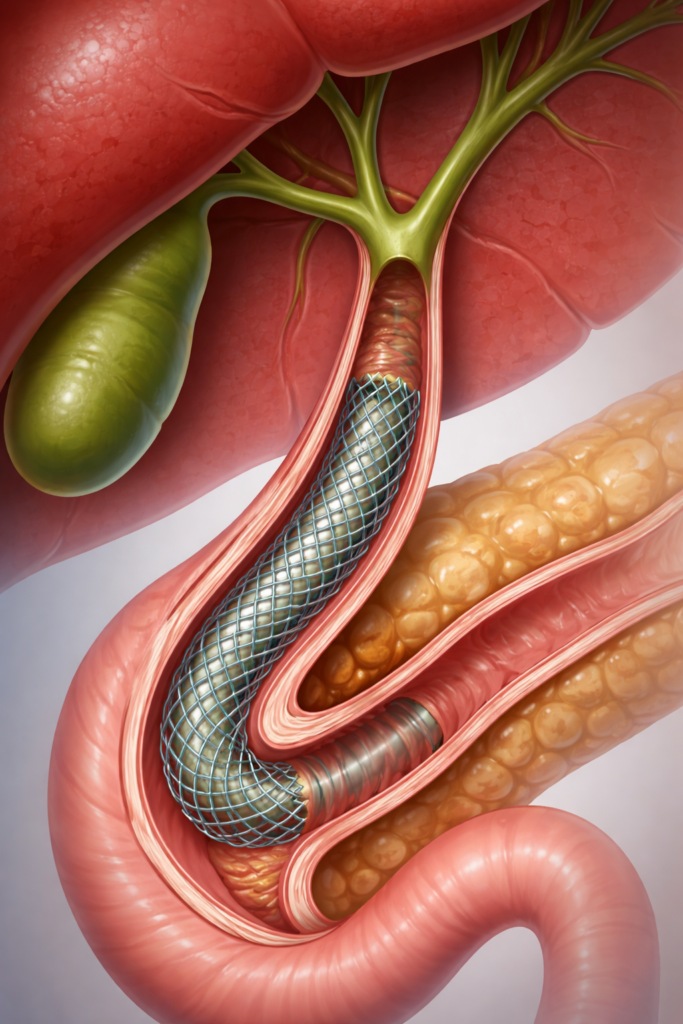
ERCP vs Standard Endoscopy: Key Differences
While both procedures fall under the endoscopy procedure, ERCP is more advanced and specialized. A standard endoscopy is primarily used for diagnosis, whereas ERCP allows doctors to treat conditions such as bile duct blockages during the same procedure.
This ability to both diagnose and treat makes ERCP a highly valuable tool in modern digestive care.
When to Call a Doctor After an Endoscopic Procedure
Although recovery is usually smooth, certain symptoms should not be ignored after an endoscopy procedure. You should contact your doctor if you experience the following symptoms:
- Severe or worsening abdominal pain
- Persistent vomiting
- Fever or chills
- Increasing jaundice
- Difficulty swallowing
Prompt medical attention can prevent complications and ensure proper recovery.
Final Thoughts
Bile duct stents placed through an advanced endoscopic procedure like ERCP offer a safe, effective, and minimally invasive way to restore normal digestive flow.
ERCP has become a cornerstone in the treatment of bile duct blockages, as it combines both diagnosis and treatment in a single session. Early consultation with Dr. Fahd and timely intervention can help prevent serious complications and improve overall health outcomes.
FAQs
Is the ERCP procedure painful?
No, endoscopic procedures are not painful. The procedure is painless because it is performed under sedation.
Is ERCP a major surgery?
No, ERCP is not a major surgery; instead, it is a minimally invasive procedure.
What diseases can an endoscopy detect?
Endoscopy can detect ulcers, tumours, inflammation, infections, and bile duct blockages.
How long does a bile duct stent last?
Plastic stents last a few months, while metal stents can last longer, depending on the condition.