
Jaundice, tea-coloured urine, clay-coloured stools, itching, and an ache beneath the right ribs are the classic signs that bile is struggling to reach the intestine. The cause is often a stone, a narrowing, a leak, or an infection behind a blockage, and ERCP can often find it and treat it in one sitting.
This guide explains what ERCP does for the liver and bile ducts, why you might need it, what can go wrong, and how to recover safely with a liver specialist in Lahore.
ERCP (Endoscopic Retrograde Cholangiopancreatography)
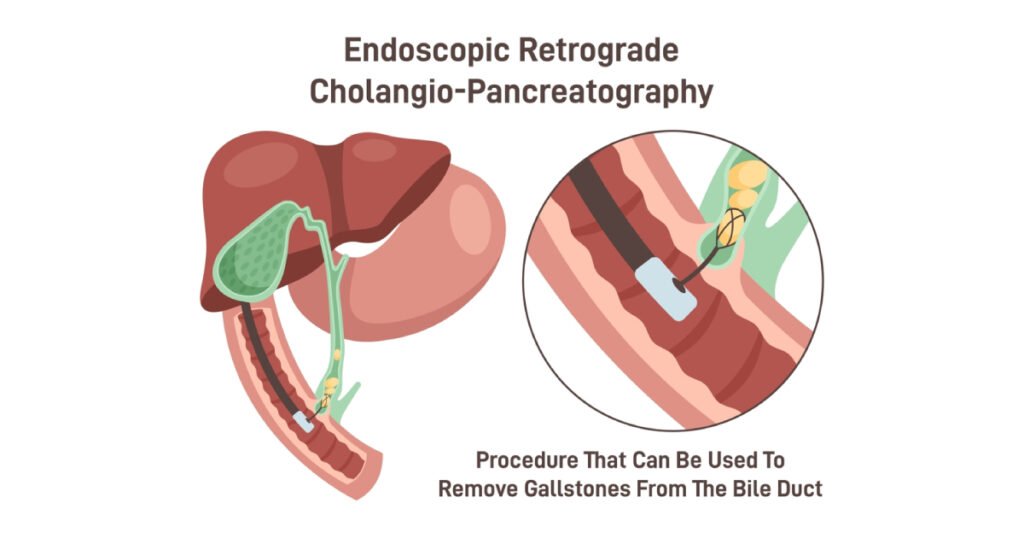
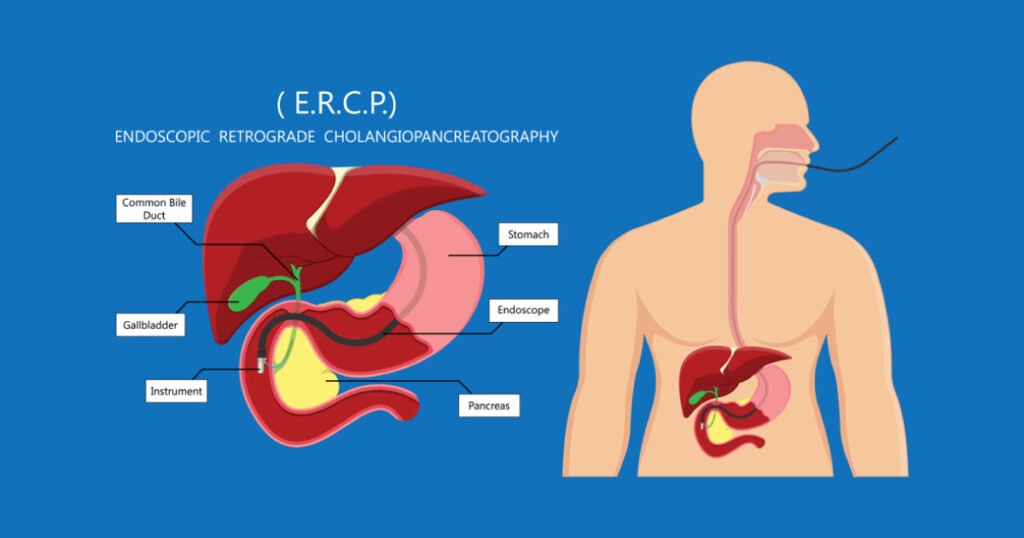
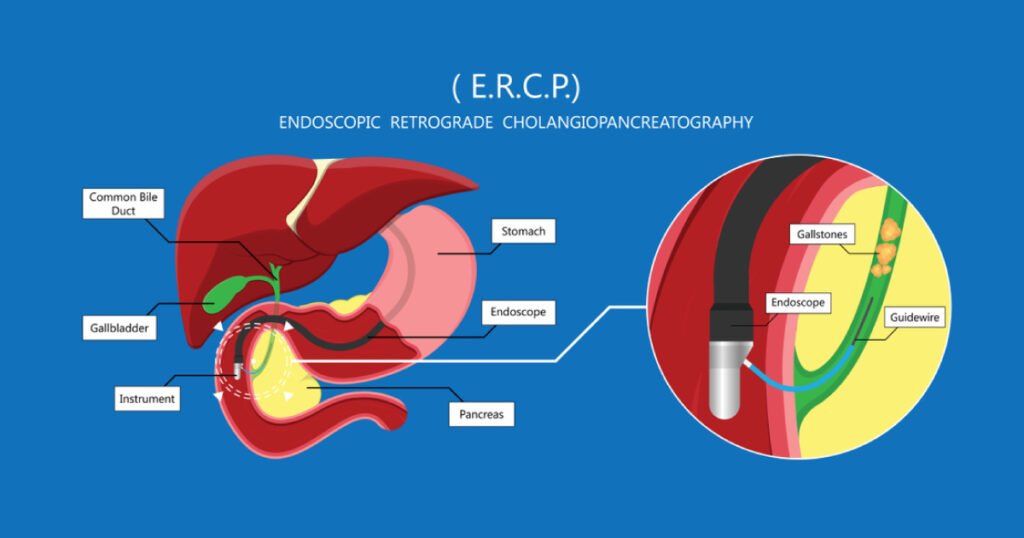
ERCP (Endoscopic Retrograde Cholangiopancreatography) is a specialised procedure where a doctor uses a flexible tube with a camera to gently guide it through your mouth and into the first part of your small intestine, reaching the openings of the bile and pancreatic ducts. Through this tube, the doctor can add a special dye, take X-ray pictures, and use tiny tools to treat blockages or other problems in the ducts.
A standard endoscopy looks inside your stomach, but ERCP goes a step further by examining the tubes that carry bile. Some people call it a “liver endoscopy”, but the camera doesn’t actually go into the liver. Instead, it helps the doctor treat the tiny channels that drain bile from your liver into your digestive system.
Why would I need an ERCP by a Liver Specialist in Lahore
Doctors usually recommend ERCP when blood tests or scans (ultrasound, CT, or MRCP) show a blocked or damaged bile duct. Common triggers include:
- Jaundice with pain, fever, or itching
- Stones in the bile duct, with or without gallbladder disease
- Repeated bouts of pancreatitis with a suspected duct cause
- A narrowing seen on imaging after surgery or inflammation
- A bile leak after gallbladder or liver surgery
- A suspected tumour blocking the duct
If you have liver disease symptoms such as persistent jaundice, pale stools or unexplained weight loss, scans and blood work always come first. They show whether a duct problem exists and whether it needs treatment.
How ERCP treats liver and bile duct complications
- Removing bile duct stones: This is the most common reason for ERCP. The specialist widens the duct opening slightly (a sphincterotomy) and sweeps the stones out with a small basket or balloon. Large stones may be crushed first.
- Opening strictures: A stricture is a narrowing of the duct, caused by scarring, inflammation, or a tumour. A small balloon can stretch it, and a stent can then hold it open so bile flows freely.
- Placing stents: A plastic or metal stent is a small tube that keeps a duct open. Stents treat strictures, tumours that cannot be removed, or leaks while they heal.
- Treating bile leaks: After gallbladder or liver surgery, bile can escape into the abdomen. A stent placed through the duct opening gives bile an easier route into the intestine than out through the tear, which gives the damaged area time to heal. This approach helps many patients avoid a second operation.
- Draining infection (cholangitis). When a blocked duct becomes infected, bacteria can spread to the bloodstream and cause life-threatening septicaemia. Urgent duct drainage, alongside antibiotics, is the key treatment. This is why fever with jaundice should never be left to “wait and see”.
- Taking tissue samples: Brushings or biopsies from a narrowed duct help show whether the cause is benign or cancerous. Cholangioscopy, a miniature camera placed inside the duct, allows targeted sampling where scans are unclear.
What are the risks and complications of ERCP?
Because ERCP is done in a sensitive part of your body, it does carry more risk than a regular endoscopy. Most people recover without trouble, but it’s important to know which problems to watch for.
| Complication | What it is | Symptoms to watch for |
| Post-ERCP pancreatitis | Irritation and inflammation of the pancreas, the most common complication | Worsening upper abdominal pain, nausea, and vomiting, usually within hours |
| Infection (cholangitis) | Infection in the biliary system, especially if drainage is incomplete | Fever, chills, and jaundice returning |
| Bleeding | Mostly after a sphincterotomy | Black stools, vomiting blood, dizziness |
| Perforation | A small tear in the gut wall or duct from the scope or instruments | Severe or spreading abdominal pain, fever, a rigid abdomen |
| Sedation reaction | Breathing or blood pressure changes | Usually managed during the procedure by the anaesthesia team |
| Contrast dye allergy | Rash, itching, or rarely, a serious reaction | Tell the team about any previous reaction beforehand. |
Published ranges are about 3–10% for pancreatitis, around 1% for bleeding, and well under 1% for perforation. Most cases of pancreatitis are mild. These figures vary by patient and reason for the procedure, so ask your specialist about your own risk.
Is ERCP a high-risk procedure?
ERCP carries a higher risk than most common endoscopy procedures, so doctors recommend it only when it’s truly needed for treatment, not just for diagnosis. Your personal risk depends on your age, the reason for the test, how easily the doctor can reach your ducts, and whether you’ve had pancreas problems before.
How is the risk lowered?
- Using MRCP or EUS first when the diagnosis is unclear
- Giving anti-inflammatory medication and fluids to higher-risk patients
- Placing a temporary pancreatic stent in selected cases
- Choosing an experienced operator, since volume and training matter
- Monitoring you closely for hours afterwards
What foods should I avoid after ERCP?
Start gently. Many people start with clear fluids and move to soft, light meals if they feel well, but follow your team’s instructions. For the first day or two, avoid:
- Fried, oily and fatty foods (biryani, parathas, takeaway food)
- Very spicy dishes
- Alcohol, which also irritates the pancreas
- Large, heavy meals
Simple choices such as khichdi, boiled rice, soup, toast, bananas, yoghurt and well-cooked vegetables are usually easier to tolerate. If you had a stent placed or stones removed, your doctor may give extra advice.
Choosing a liver specialist in Lahore for ERCP
ERCP outcomes depend on the person performing it. If you are searching for the best hepatologist in Lahore, ask about training, case volume, and how clearly they explain the plan.
Book a consultation
If you or a family member has jaundice, bile duct stones, repeated pancreatitis or an unexplained liver or bile duct problem, early assessment with Dr Fahd Aziz Rana makes treatment safer.
Fever with jaundice or severe abdominal pain is an emergency. Don’t wait for an appointment; visit the emergency department of Omar Hospital.