
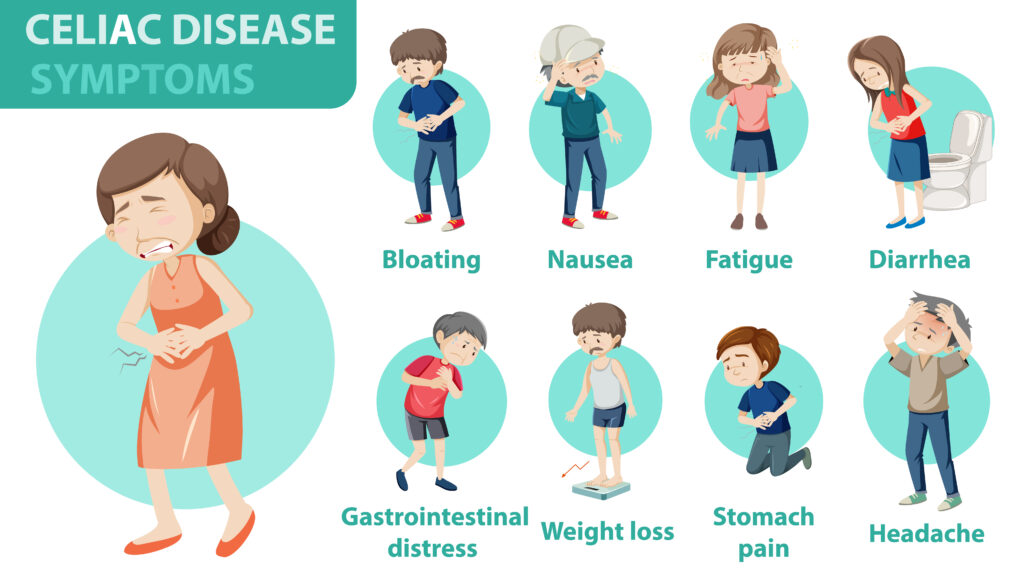
If you’ve been feeling bloated, tired, having stomach pain, or noticing unexplained weight changes, it’s natural to wonder if it’s celiac disease, a food intolerance, or something else. On the surface, they may appear to be the same, but they are diagnosed very differently. Doctors use the upper GI endoscopy with a small intestine biopsy as the definitive test to diagnose or rule out celiac disease.
Here’s why endoscopy has that position, how it differs from food intolerance testing, and what the process looks like from preparation to results.
How Is Celiac Disease Usually Diagnosed?
The diagnosis starts with a blood test that looks for antibodies your immune system produces in response to gluten. If those levels are elevated, or if your symptoms and history strongly suggest celiac disease despite the blood results, the next step is an upper gastrointestinal endoscopy. This is a stomach scope that goes into your small intestine and collects tissue samples for biopsy. Blood tests check for the possibility; endoscopy confirms it.
Why Endoscopy Is the Gold Standard for Diagnosing Celiac Disease
Celiac disease damages the small intestine, specifically the tiny finger-like villi that absorb nutrients. This damage cannot be detected directly with a blood test or a scan. During an upper GI endoscopy, the doctor gently inserts a thin, flexible camera through the mouth into the stomach and the first part of the small intestine (the duodenum), watches the intestinal lining in real time, and takes small biopsy samples from several areas. This is more reliable than blood tests alone because celiac damage can occur in several areas that need to be sampled during endoscopy.
The Role of Biopsy in Confirming the Diagnosis
The biopsy is the key part of the test. After tissue samples are taken during the endoscopy, a pathologist examines them under a microscope for villous atrophy, the number of inflammatory cells, and the structure of the crypts in the intestinal lining. With these findings, a “suspected” case becomes a confirmed celiac diagnosis.
Why the Diagnostic Approach Differs for Food Intolerances
Food intolerances, such as lactose or fructose intolerance, do not actually damage the intestinal lining and are typically not diagnosed with an endoscopy and biopsy. Instead, physicians use breath tests, elimination diets, or symptom diaries.
If your doctor thinks your symptoms suggest an intolerance, but you have never had an endoscopy, they will likely want to perform one first to rule out celiac disease or another structural problem, since the symptoms are so similar.
Which Patient Groups Should Undergo Endoscopic Screening for Celiac Disease?
Endoscopic evaluation is generally recommended for people who have:
- Positive or borderline celiac blood antibody tests
- Ongoing GI symptoms (chronic diarrhea, bloating, abdominal pain) without a clear cause
- Unexplained iron-deficiency anemia
- A first-degree relative with celiac disease, especially with symptoms
- Unexplained weight loss or nutrient deficiencies
- Conditions linked to higher celiac risk, such as type 1 diabetes or autoimmune thyroid disease
Is There a Role for Video Capsule Endoscopy in Diagnosing Celiac Disease?
Video capsule endoscopy, or using a tiny camera inside a capsule that takes photos as it moves through the intestine, is not the first test used to diagnose celiac disease. It does not allow the doctor to take biopsies that confirm the diagnosis. However, it can be useful in certain situations, such as assessing the degree of small bowel involvement in complicated or non-responsive celiac disease, or examining the deeper parts of the small bowel beyond what a standard scope can reach.
What to Expect During and After an Upper GI Endoscopy
Preparing for the Endoscopy Procedure
You will need to fast for 6-8 hours beforehand to ensure that no food remains in the stomach or duodenum to interfere with the view. Your doctor will also tell you whether you can continue taking certain medicines or you should stop them. The procedure is sedated, so you’ll need the help of someone to drive you home afterward.
Understanding Your Endoscopy Results
The doctor may be able to see these changes immediately on the inside of the bowel, and the final result will come from the biopsy report, which can take a few days to a week. Your gastroenterologist will share the results with you and explain what they mean for your diagnosis and treatment, including whether you need to follow a gluten-free diet.
Why Is Endoscopy Recommended Over Blood Tests Alone?
Blood tests may be negative in individuals who are IgA deficient or have already started eliminating gluten. They also cannot show how much intestinal damage, if any, has occurred. It is hard to see how an indirect antibody signal could ever compare with the direct physical evidence provided by endoscopy with biopsy; that is why it remains the confirmatory rather than optional step.
What Is a Biopsy and Why Is It Important?
A biopsy involves taking a small piece of tissue from the lining of the small intestine during endoscopy. It’s important because what’s happening at the tissue level, villous atrophy, defines celiac disease, not antibody levels in the blood. Most gastroenterology guidelines state that a diagnosis of celiac disease is not complete without a biopsy.
When Is Endoscopy Recommended for Celiac Disease?
Endoscopy is usually recommended after a positive or inconclusive blood test, when someone has strong risk factors or symptoms even if blood tests are normal, and, in some cases, when the intestine has not healed after starting a gluten-free diet.
Is the Procedure Painful?
Most people don’t feel pain during an endoscopy because it’s done under sedation. You may experience some throat discomfort, bloating, or grogginess afterward, but this usually goes away within a day.
Should You Continue Eating Gluten Before the Procedure?
Yes, this is important. You should continue eating gluten as usual in the weeks before both the blood test and the endoscopy. Removing gluten beforehand can allow the intestinal lining to begin healing, which may cause a false-negative result and hide a real diagnosis.
Diagnostic Tests for Celiac Disease: Blood Tests vs Upper Endoscopy
| Terms | Blood Test | Upper GI Endoscopy with Biopsy |
|---|---|---|
| What it checks | Antibody levels | Direct tissue damage |
| Can confirm diagnosis alone | No | Yes |
| Invasive | No | Minimally, under sedation |
| Can miss cases | Yes (false negatives possible) | Rare when properly sampled |
Both tests work together: blood work serves as the screening step, and upper GI endoscopy confirms the result.
Diagnosing Non-Celiac Gluten Sensitivity
For people without celiac disease, gluten sensitivity can cause many of the same symptoms, including bloating, fatigue, and brain fog, but without the antibodies or damage to the intestinal lining. It is essentially a diagnosis of exclusion: celiac disease and wheat allergy are ruled out first, usually after a normal endoscopy and biopsy, and symptoms improve on an FODMAP diet.
Endoscopy vs Colonoscopy for Celiac Disease
These two procedures aren’t interchangeable. Celiac disease affects the small intestine, which is examined through an upper GI endoscopy (via the mouth), not a colonoscopy (via the rectum), which examines the large intestine. Colonoscopy is used for other concerns, such as colon polyps, colitis, or colorectal cancer screening, not for diagnosing celiac disease.
Frequently Asked Questions
What do celiac disease endoscopy findings look like?
The lining often appears flattened, scalloped, or reduced in its normal fold pattern, sometimes with a mosaic or cracked-mud appearance. Some patients have a lining that looks completely normal on camera despite biopsy-confirmed damage.
How do I prepare for an endoscopy for celiac testing?
Here’s how you can prepare for an endoscopy for celiac testing: Fast for 6-8 hours beforehand, keep eating gluten normally until the test, and follow your doctor’s instructions on medications.
What are the 4 types of celiac disease?
As per the clinicians, the 4 types of celiac disease include classic (clear digestive symptoms), non-classical/atypical (subtler symptoms like anemia or fatigue), silent (no symptoms but positive tests and intestinal damage), and latent/potential celiac disease (positive antibodies without confirmed intestinal damage yet).